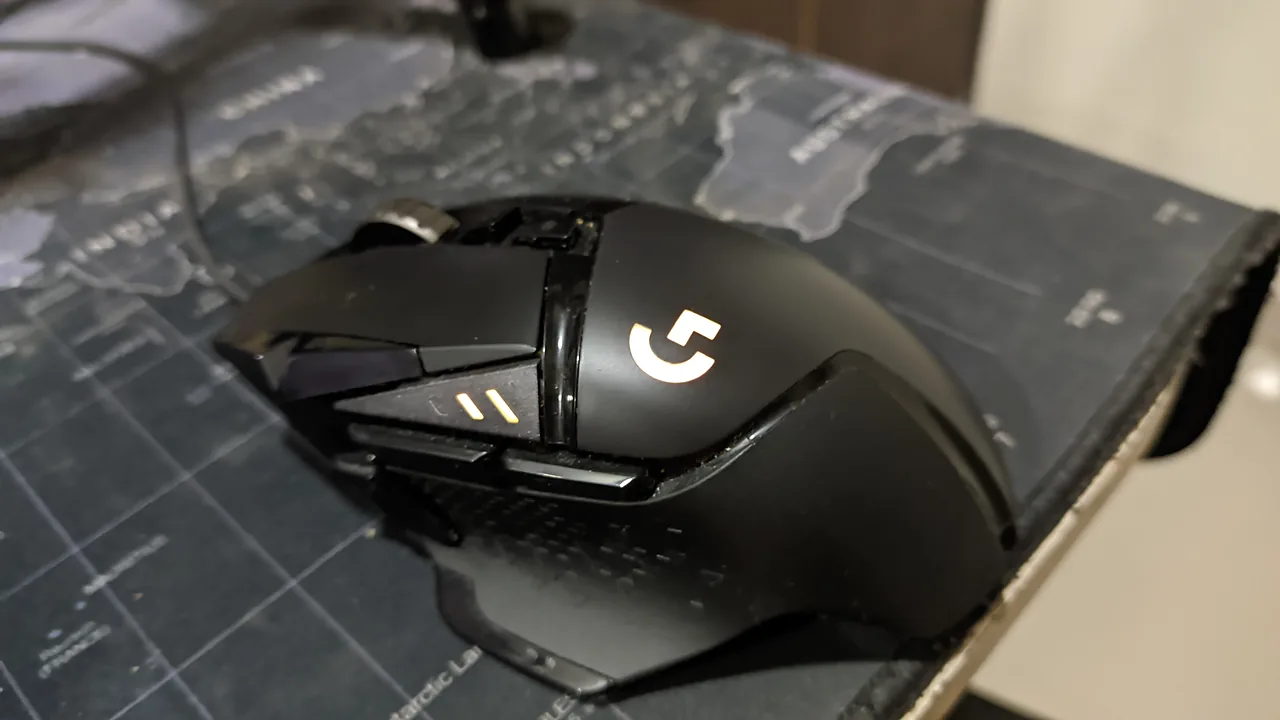
Logitech runs two configuration programs side by side, and installing the wrong one is the number-one reason a Logitech gaming mouse or keyboard “has no software.” The rule is simple: devices released from 2018 onward use G HUB; older devices use the classic Logitech Gaming Software (LGS), which Logitech still hosts but no longer updates. This guide tells you which one your device needs, where to get both safely, and how to fix the usual failures.
Last checked: September 2026.
Which one does your device need?
- G HUB — current software for G-series gear from roughly 2018 on (G502 HERO, G305, G PRO line, G915, current headsets). Automatic per-game profiles, LIGHTSYNC lighting, cloud profile sync.
- LGS (Logitech Gaming Software) — final versions 9.02/8.x, for devices from before 2018 (original G502 Proteus, G402, G27/G29 wheels of that era, older G keyboards). It is fully offline, needs no account — and receives no updates or security patches anymore.
- Transitional devices (~2017–2019) appear in both. Pick one and stick to it: running LGS and G HUB at the same time makes them fight over the device.
The definitive answer is on your device’s support page at support.logi.com — search the model and see which software it lists under Downloads.
Download from Logitech only
- G HUB: logitechg.com — the installer is a small bootstrapper that pulls the rest during setup.
- LGS: Logitech’s own archived download page: support.logi.com — Logitech Gaming Software. Pick the 64-bit build unless you know you’re on 32-bit Windows. Skip every third-party “LGS download” portal; several bundle adware around the old installer.
Install order that avoids trouble
- If the wrong program is installed, uninstall it first and reboot.
- Install the right one, plug the device directly into the PC (not a hub) so firmware detection works.
- In G HUB, sign-in is optional — skip it if you don’t need cloud sync of profiles.
- Set your DPI stages, key binds, and lighting, then — for mice with onboard memory — write the settings to the device so they survive on PCs without the software.
Troubleshooting
- G HUB stuck on the loading spinner forever. The classic failure. Quit G HUB fully (tray icon → Quit), delete the folder
%LOCALAPPDATA%\LGHUB, and start it again — it rebuilds its data. If it persists, reinstall with the current installer from Logitech. - Device not showing in G HUB. Check the support page — a pre-2018 device will never appear there; that’s an LGS device. Also try another USB port and, for wireless gear, the receiver it shipped with. (For pairing basics, see our Unifying receiver guide.)
- Profiles don’t switch per game. In G HUB, add the game’s .exe manually in the profile’s game list; automatic detection misses less-common launchers.
- LGS won’t start on Windows 11. It generally runs, but as unmaintained software it can trip on new builds. Run the installer in compatibility mode (Windows 8) and exclude it from “fast startup” quirks by rebooting fully once.
- Settings vanish on another PC. That’s expected — save to onboard memory (LGS: Automatic Game Detection toggle set to On-Board Memory; G HUB: Settings → On-Board Memory Mode).
The honest recommendation
If your gear is post-2018, install G HUB and never think about LGS. If your gear is older and working with LGS, keep LGS — switching gains nothing and loses features. Just don’t install both, and don’t “update” LGS from anywhere except Logitech’s own page, because there is no update: the last version is the last version.
Related on AppInstall.info: pairing devices with the Logitech Unifying receiver, and installing apps with winget.
Featured image: Photo: Panthermail / Wikimedia Commons, CC BY-SA 4.0