
Appsintall.info – Most people only think about their browser or office apps when they use a computer. But behind the scenes, there is another category of tools that quietly keeps everything fast, secure, and organized:
Utility software.
If your device feels slow, runs out of storage, overheats, or gets cluttered with junk files, you’re not always forced to buy a new PC. Often, you just need the right set of utility tools and a simple maintenance routine.
In this guide, you’ll learn:
- What utility software actually is
- The main types of utility tools you should know
- How to choose the right utility software for your needs
- Practical examples and use cases
- A safe weekly/monthly routine to keep your system healthy
What Is Utility Software?
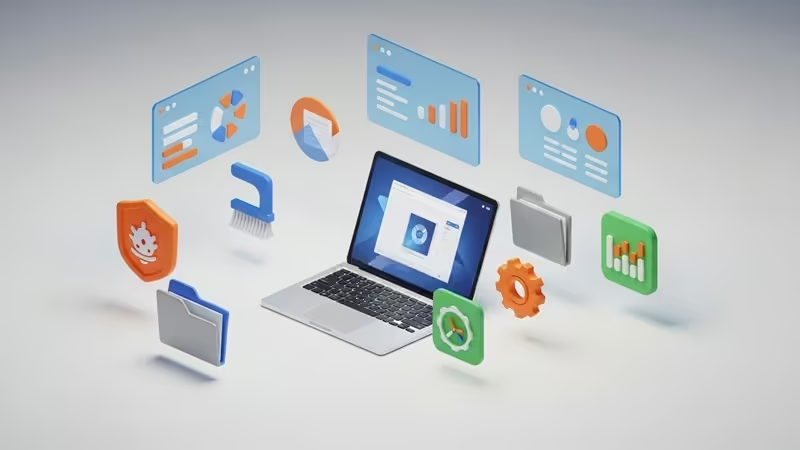
Utility software is a category of programs designed to maintain, analyze, optimize, and protect your computer system.
If we compare it to something like this:
- Operating system = house
- Applications such as browsers, office suites, and editors = the occupants of the house
- Utility software = the cleaners, technicians, and security guards who keep the house tidy and safe.
Some of the main functions of utility software:
- Cleaning temporary and junk files
- Managing storage space (disk space)
- Protecting against malware, spyware, and other security threats
- Assisting with data backup and restoration
- Managing drivers and hardware
- Managing startup programs and system performance
Without utility software, your computer could:
- Get slower over time
- Become full of invisible junk files
- Become more vulnerable to security attacks
- At risk of losing important data
How to Choose the Right Utility Software

Before installing anything, it is important to know the basic criteria of good utility software:
1. Security and Reputation
- Only use software from official sites or trusted sources.
- Check reviews and the tool’s reputation.
- Avoid utilities full of ads, bundled toolbars, or questionable “bonus software.”
2. Operating System Compatibility
- Make sure it supports your version of Windows (10, 11, etc.) or other systems (macOS, Linux).
- Check 32-bit/64-bit compatibility if relevant.
3. Truly Necessary Features
- Don’t go for “all-in-one” if you only need a few functions. Focus on:
- Cleaning and optimization
- Security and privacy
- Backup and recovery
- File and storage management
4. Ease of Use
- Clear interface, uncomplicated settings
- Automatic or “one-click maintenance” mode for novice users
5. Transparency and Control
- See what’s been deleted/changed
- Undo options or create restore points
Main Types of Utility Software You Should Know

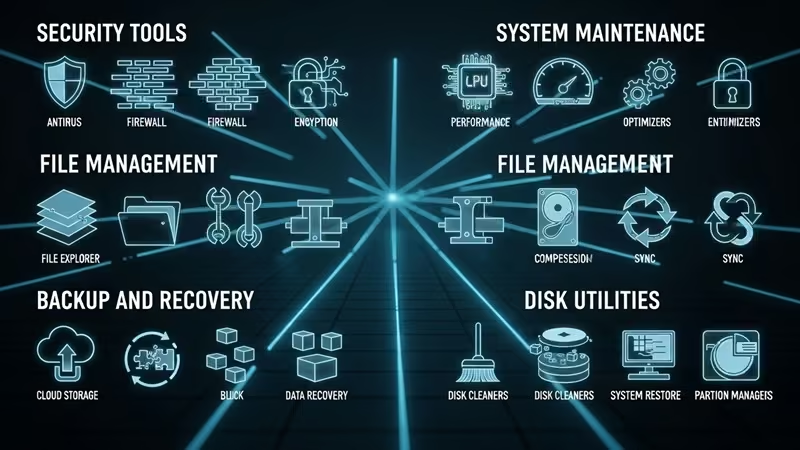
For simplicity, we’ve divided utility software into several categories:
1. System Cleaning & Optimization Tools
Function:
- Deletes junk files, cache, and temporary files
- Clears browser cache, old logs, and unused files
- Optimizes startup programs
Example benefits:
- Frees up storage space
- Fastens booting and application loading
- Reduces system load
Things to avoid:
- Aggressive registry cleaners (risk of system damage)
- Tools that promise “+300% performance”
2. Security & Privacy Utilities
Function:
- Protects against viruses, malware, ransomware, spyware, and adware
- Removes adware embedded in browsers
- Adds a layer of security above the OS’s built-in antivirus
Example benefits:
- Prevents data theft
- Reduces malicious pop-up ads
- Keeps the system clean of suspicious programs
Ensure:
- The security utility does not conflict with the main antivirus
- The software source is clear and trusted
3. Backup & Recovery Tools
Function:
- Back up important files or the entire system
- Restore the system to a previous state (restore)
- Save data to an external hard drive or the cloud
Why it’s important:
- Hard drives can fail at any time
- Ransomware can lock data
- Human error (accidentally deleting important files)
4. Disk & File Management Utilities
Function:
- Displays the largest files on the disk (for cleanup)
- Finds duplicate files
- Manages partitions
- Provides SSD/HDD health information
Benefits:
- Helps understand where storage space is “lost”
- Makes it easier to organize data
- Helps detect hard disk problems
5. Compression & Archive Utilities
Function:
- Compress files to .zip, .rar, .7z, etc.
- Extract archive files
- Split large files into multiple parts
Example benefits:
- Easier emailing
- Storing multiple files in one package
- Saves storage space
6. Driver and Hardware Utilities
Function:
- Helps with driver updates
- Manages printers, scanners, and other devices
- Detects hardware compatibility issues
Examples:
- Printer drivers (e.g., Epson Event Manager, HP ePrint)
- Graphics card drivers (e.g., AMD Radeon Driver Utilities)
- Tools for remote desktop and network connections
- For users with limited USB ports, the Unifying Receiver provides a simple solution
7. Productivity and Focus Tools
Function:
- Tracks app usage time
- Blocks distractions
- Manages appointments and tasks
Example benefits:
- Identifies how you spend your time
- Helps you focus at work
- Reduces unnecessary multitasking
Application Examples for Utility Software
- WinRAR / 7-Zip / File Compression → for compressing and extracting files
- PDF Tools (Adobe Acrobat, etc.) → for editing, merging, or performing optical character recognition (OCR) on PDFs
- Printer Utilities (Epson Event Manager, HP ePrint) → for optimal scanning and printing
- Remote Access Utilities / Remote Desktop Tools → for remote access to a computer
- Multimedia Utilities (Media Players, Codec Packs) → for playing various audio/video formats
You can add your own table of recommendations per category in other sub-articles, while this main page focuses on training and organization.
How to Develop a Safe Utility Routine
Many people install too many utility programs, slowing down their systems. What you really need:
1. Daily
- Check your system for unusual pop-ups or accidentally installed programs.
- Make sure your antivirus and security software is working properly.
2. Weekly
- Delete unnecessary files and clear your cache.
- Check your disk space (is it running low?).
- Update utility programs as soon as a new version is available.
3. Monthly
- Back up important files.
- Check the health of your hard drive (if you use an SSD/HDD testing tool).
- Review your installed programs and remove any unnecessary ones.
Common Mistakes When Using Utility Software
To avoid damaging your system, you should avoid the following:
1. Installing too many utility programs with the same function
- For example, 3 registry cleaners, 4 antivirus programs, 5 “booster tools”
2. Deleting files whose function you don’t understand
- When in doubt, don’t delete them
3. Using “cracks” or pirated copies of utility software
- High risk of malware
4. Believing exaggerated promises
- For example, “Instant 500% performance boost”
5. Not reading logs or change summaries
- Even though this is the best way to find out what changes the software has made
FAQ: Utility Programs
Q: Are utility programs essential?
They are not essential, but they can be very helpful in the long run for keeping your computer healthy, secure, and user-friendly.
Q: Can utility programs replace antivirus software?
No. Utility programs can improve security, but they do not replace your primary antivirus program or the operating system’s built-in security features.
Q: Are all “PC boosters” safe?
No. Many “boosters” make empty promises, and some even contain adware. Choose only programs with a good reputation.
Q: How many utility programs are ideal?
This depends on your needs, but generally, the following are sufficient:
- 1 additional security/anti-malware tool (if needed)
- 1 lightweight cleaning/optimization program
- 1 backup tool
- 1–2 file/disk/driver utilities
Conclusion: A Toolkit Is Not a Problem
Utilities may not seem particularly exciting at first glance, but they work tirelessly behind the scenes to keep your computer running smoothly for years.
By:
- selecting the right utilities,
- using them sensibly and regularly,
- and avoiding tools that are aggressive or make exaggerated promises,
you will achieve:
- a faster system
- more storage space
- a significantly lower risk of data corruption and loss
Next step:
Create a list of your favorite utilities and use this main article as a central reference for all other articles about software tools on your website.