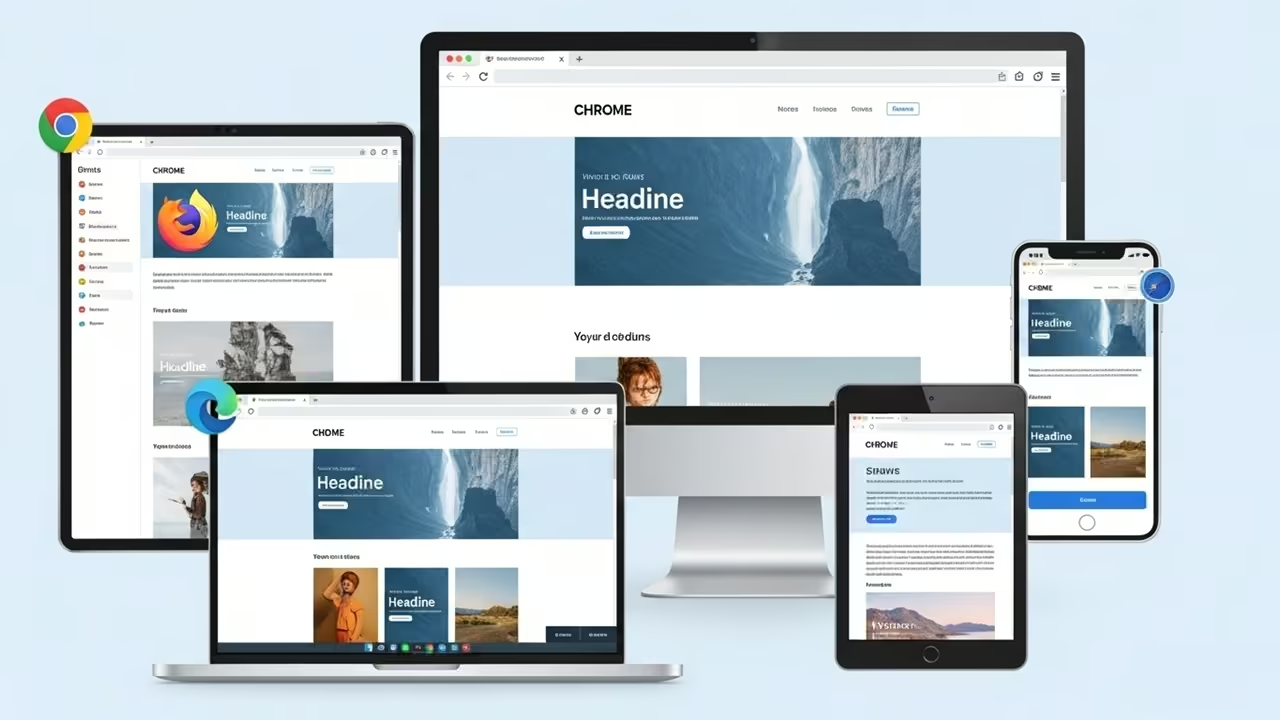
Appinstall.info – Choosing the right web browser for your site is more important than ever. Whether you are a website owner, developer, blogger, or business operator, the browser you use directly affects how accurately you preview your website, how efficiently you work, and how secure your browsing environment is.
This guide explains how to choose the best web browser for your needs—based on speed, security, compatibility, developer tools, user privacy, and cross-platform support.
What Is a Web Browser?
A web browser is software used to access, render, and interact with content on the internet. Popular browsers include:
- Google Chrome
- Mozilla Firefox
- Microsoft Edge
- Apple Safari
- Opera
- Brave
Each browser uses a rendering engine (Blink, WebKit, or Gecko) to interpret HTML, CSS, and JavaScript—meaning the browser you choose affects how your site looks and behaves.
Why Does Choosing the Right Browser Matter?
Using the right browser matters because:
- Your website may look different in each browser. Not all browsers interpret code the same way. A layout that works perfectly in Chrome might break in Safari or Firefox.
- Performance impacts testing. Some browsers handle JavaScript faster, while others handle animations or CSS transitions more smoothly.
- Developer tools differ between browsers. If you’re testing a website, browser DevTools are essential. Chrome and Firefox DevTools are the industry standard.
- Security & privacy levels vary. Some browsers track user behavior more aggressively, while others block ads and trackers by default.
- Cross-platform consistency is crucial. If your audience includes Windows, macOS, iOS, and Android users, you need to test across multiple browsers.
For best results, many developers combine a good browser setup with reliable system utility tools to keep their devices optimized while testing websites.
Factors to Consider When Choosing a Web Browser for Your Site
1. Rendering Engine Compatibility
Each browser uses a different rendering engine:
| Browser | Engine |
|---|---|
| Chrome, Edge, Opera, Brave | Blink |
| Firefox | Gecko |
| Safari | WebKit |
To ensure your website is compatible with all major browsers, you should test your site on multiple engines—not just one browser.
2. Speed and Performance
Page speed affects both user experience and SEO. Browsers handle performance differently:
- Chrome & Edge: Generally excellent JavaScript performance and modern web standards support.
- Safari: Very efficient on macOS and iOS, with strong battery optimization.
- Firefox: Solid performance with good memory management.
3. Security Features
Choose a browser with strong built-in security, including:
- Malware and phishing protection
- Sandboxed browsing
- HTTPS enforcement
- Automatic security updates
For users who rely heavily on Windows, pairing a secure browser with dedicated Windows tools can further harden the environment.
4. Developer Tools
For web developers and site owners, strong DevTools are essential. The best options include:
- Google Chrome: Industry standard DevTools with powerful debugging, network inspection, and performance profiling.
- Firefox Developer Edition: Advanced tools for CSS, JavaScript, and accessibility debugging.
- Microsoft Edge: Chromium-based tools with added integrations for Windows and enterprise environments.
Ideally, you should use at least two different browsers for testing and debugging your site.
5. Extensions & Integrations
The browser should support extensions and tools you rely on, such as:
- Password managers
- Ad blockers
- SEO and analytics extensions
- Performance and accessibility checkers
The Chrome Web Store has the largest extension ecosystem, and many Chromium-based browsers (Edge, Brave, Opera) can use the same extensions.
6. Privacy & Tracking Protection
If privacy is important to you or your visitors, consider browsers that block trackers and ads by default:
- Brave: Strong default blocking of ads and trackers.
- Firefox: Enhanced tracking protection and privacy features.
- Safari: Intelligent tracking prevention on Apple devices.
Chrome is highly capable but less privacy-focused by default.
7. Cross-Device Syncing
If you work across multiple devices, choose a browser that syncs:
- Bookmarks
- Passwords
- Extensions
- Open tabs
Chrome and Edge offer excellent cross-platform sync. Safari syncs beautifully within the Apple ecosystem.
Best Web Browsers for Website Owners and Developers (2025)

1. Google Chrome – Best Overall for Most Users
Pros:
- Fast JavaScript performance
- Best-in-class DevTools
- Largest extension library
- Cross-platform support
Cons:
- High RAM usage
- Less privacy-friendly by default
2. Mozilla Firefox – Best for Privacy & Open-Source Fans
Pros:
- Strong privacy protection
- Open-source and community-driven
- Firefox Developer Edition with advanced tools
Cons:
- Some sites are optimized more heavily for Chromium-based browsers
3. Microsoft Edge – Best for Windows Users
Pros:
- Built on Chromium (high compatibility)
- Fast and efficient on Windows
- Integrated with Microsoft services
Cons:
- Less popular on non-Windows platforms
4. Apple Safari – Best for macOS & iOS
Pros:
- Excellent performance and battery usage on Apple hardware
- Deep integration with macOS and iOS
Cons:
- Not available on modern Windows versions
- Smaller extension ecosystem
5. Brave – Best for Privacy-Focused Browsing
Pros:
- Built-in ad and tracker blocking
- Fast performance
- Based on Chromium (good compatibility)
Cons:
- Fewer developer-oriented features compared to Chrome or Firefox
How to Choose the Right Browser for Your Site
To decide which browser setup works best for your website work, consider this practical combination:
- Use Chrome for day-to-day development and debugging.
- Use Firefox or Firefox Developer Edition for CSS/JS testing and accessibility checks.
- Use Safari to test how your site behaves on Apple devices.
- Use Edge for testing on Windows environments and enterprise scenarios.
- Use Brave to see how privacy-focused users experience your site.
Most serious web developers use two or three browsers every day for more reliable testing.
Common Mistakes When Choosing a Browser
- Only testing a website in one browser.
- Ignoring mobile browsers and assuming desktop results match mobile.
- Using outdated browsers that don’t support modern web standards.
- Relying on a single rendering engine instead of testing across Blink, WebKit, and Gecko.
- Never checking how privacy settings or ad blockers affect your site’s layout and scripts.
FAQ
1. What is the best browser for testing websites?
For most people, a combination of Google Chrome (for DevTools and performance) and Firefox Developer Edition (for advanced debugging and CSS tools) is ideal.
2. Do all browsers display websites the same way?
No. Different rendering engines can handle layout, fonts, and scripts differently. That’s why testing on multiple browsers is crucial.
3. Should I test my site on mobile browsers?
Yes. A large portion of web traffic comes from mobile devices, so you should always test on mobile browsers such as Chrome for Android and Safari on iOS.
4. Is Chrome still the best browser?
Chrome is still one of the best choices for web development and general browsing. However, if privacy is your priority, browsers like Brave or Firefox may be better.
Conclusion
Choosing the right web browser for your site is not about picking just one tool—it’s about using the right combination. Chrome, Firefox, Edge, Safari, and Brave each bring different strengths in speed, security, privacy, and developer tooling.
By testing your website across multiple browsers and engines, you can ensure a consistent, secure, and high-quality experience for your visitors, regardless of the device or platform they use.
Combine smart browser choices with good utility software, and you’ll have a solid foundation for both development and day-to-day browsing.
This guide is about picking the right browser. Once you have chosen one, secure it with our companion guide to the best web browser protection software, or see the best browsers for programmers.